Best Starlink Mount for Coastal Orange County Homes
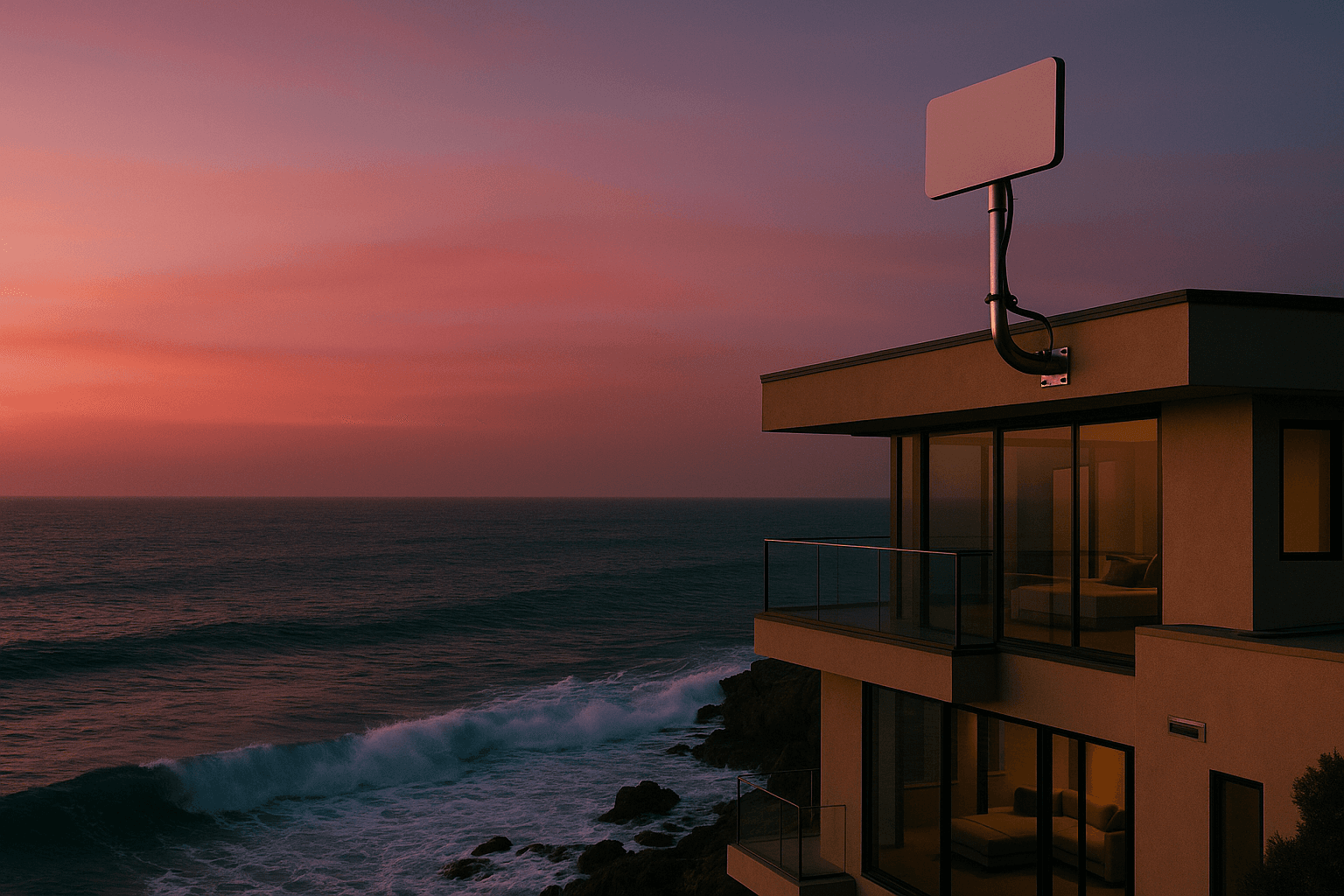
Short answer: 316 marine-grade stainless steel mount, stainless fasteners, isolation washers at any dissimilar-metal contact, and a proper sealant system rated for UV and salt exposure. That is the baseline for any Starlink install within about a mile of the ocean — Newport Beach, Corona del Mar, Dana Point, Laguna Beach, Huntington Beach bluffs, and Sunset Beach. Get the mount right once and it lasts a decade. Get it wrong and you are redoing the install in three years.
This guide breaks down why coastal OC installs need special attention, what hardware we actually use, and how the install differs from a standard inland job.
Why Coastal OC Is Different
The OC coast is a salt-spray environment with high UV, persistent onshore flow, and occasional high-wind events. Three things make it harder on outdoor hardware than installs even a mile inland:
Chloride Corrosion
Salt-laden air deposits a thin film of chloride on every exposed surface. That film pulls moisture out of the air, even on dry days. On carbon steel, galvanized steel, and lower-grade stainless, the chloride cycles rust and passivation until fasteners fail. Galvanized coatings that would last 40 years in Kansas can fail in under 5 years 300 feet from the Pacific.
Galvanic Action
When two different metals touch in the presence of an electrolyte (salt water on salt air), the less-noble metal corrodes faster. A steel bolt in an aluminum flashing plate, a zinc-plated washer on a stainless mount — galvanic corrosion eats the cheaper metal. A dry inland install survives for decades with mixed metals. A coastal install fails.
UV and Heat
Southern California UV is strong year-round. Plastic components, rubber grommets, and cheap sealants that survive a mid-Atlantic install cook off in 18 to 24 months at the coast. UV-rated sealant and UV-stable cable management matter.
The Coastal Mount Spec
Here is exactly what we use for a standard residential coastal install in OC:
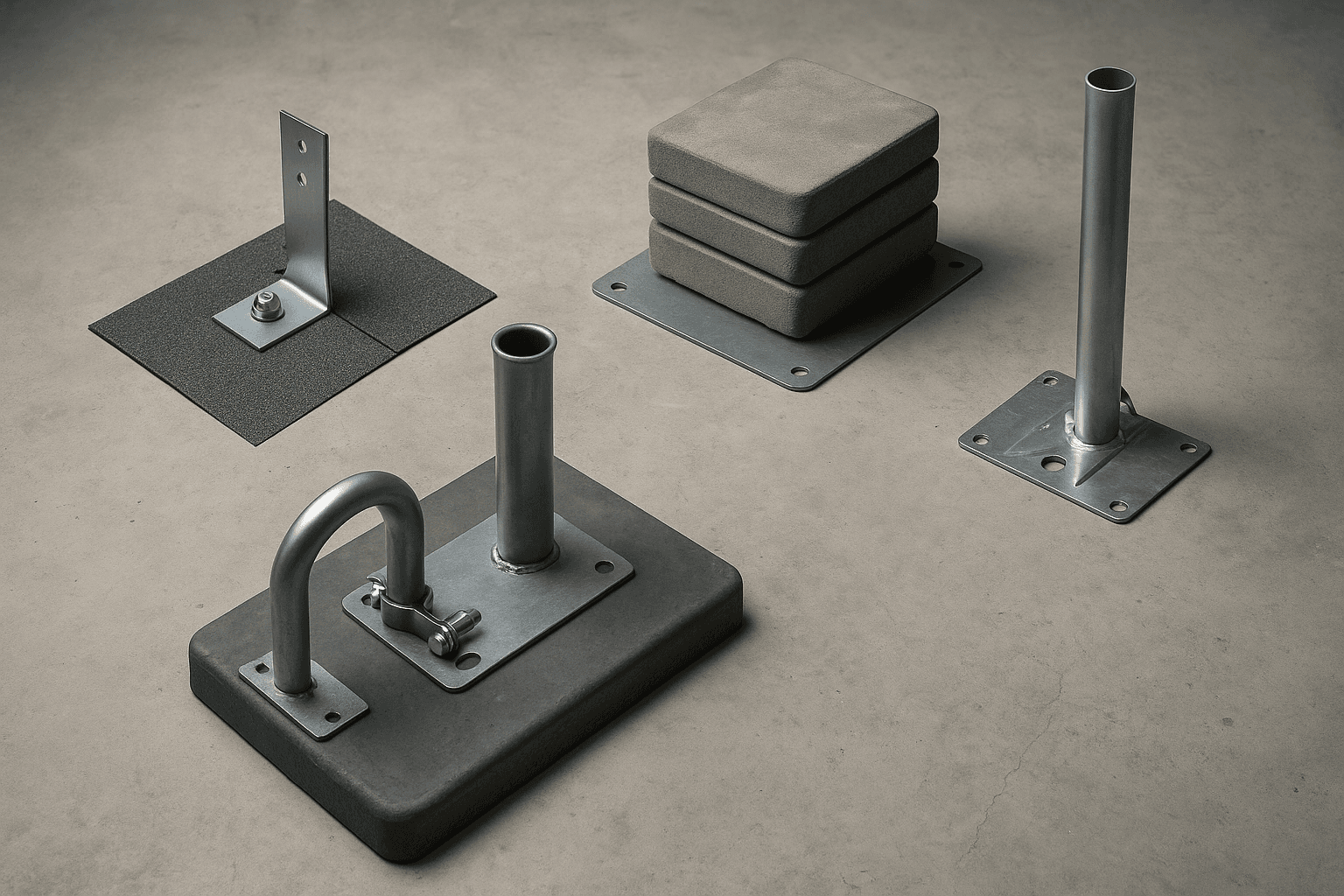
| Component | Spec | Why |
|---|---|---|
| Mount frame | 316L stainless steel | Chloride-resistant grade, holds up to splash zone |
| Fasteners | 316 stainless lag bolts and nuts | Match the mount, no galvanic coupling |
| Washers | 316 stainless with nylon or EPDM isolation where meeting different metals | Breaks galvanic circuit |
| Base plate | 316 stainless or marine aluminum with isolation | Matches the roof deck material |
| Flashing | Aluminum with EPDM isolation, or full 316 stainless on high-value homes | Sheds water, resists coastal exposure |
| Sealant | UV-rated polyurethane, tripolymer, or marine silicone | Flexes and survives coastal UV and salt |
| Cable gland | Marine-rated, UV-stable | Seals the cable entry point |
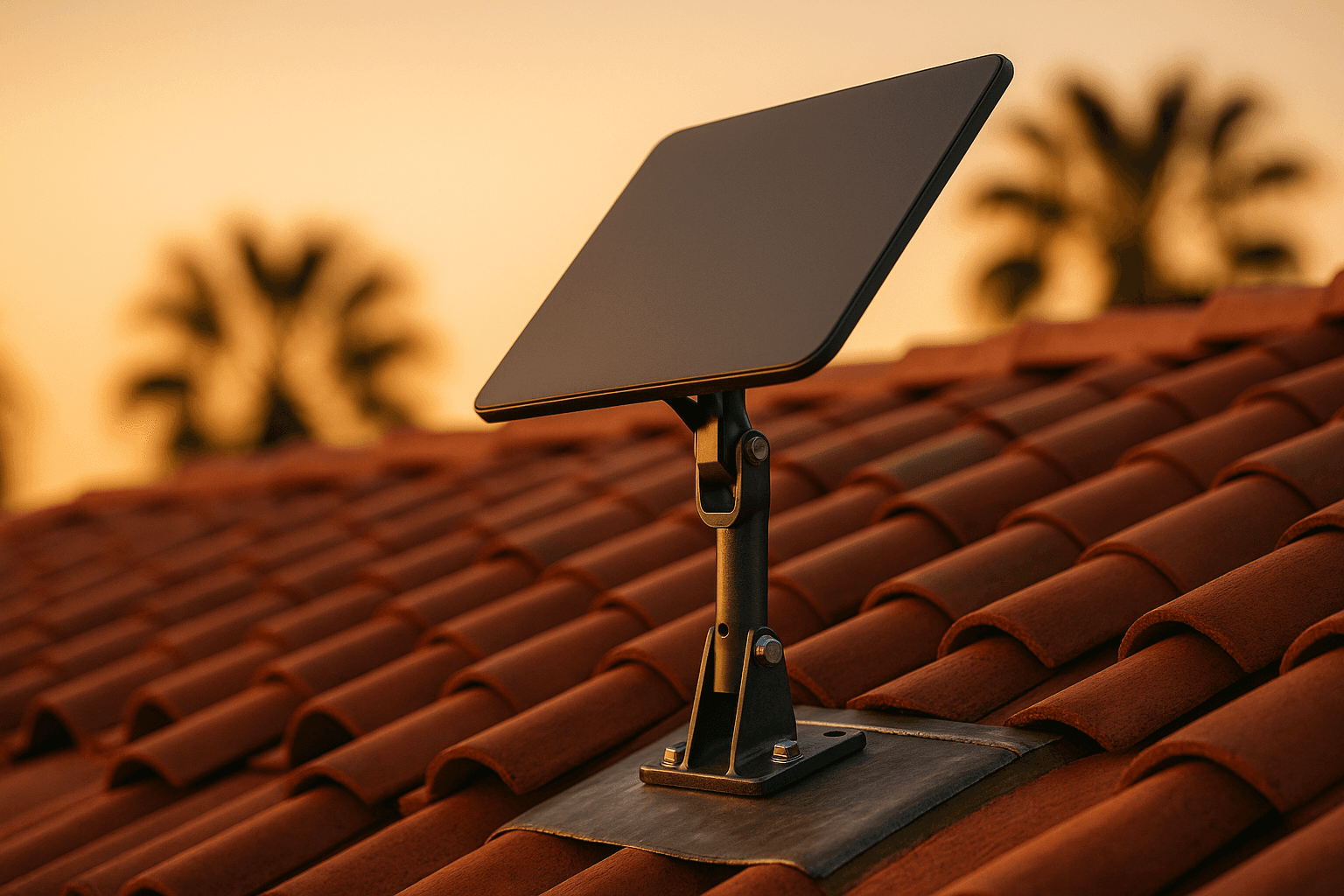
For the dish itself, we use the Starlink-provided hardware at the dish connection — no modification. Everything else in the mount assembly is upgraded.
Zones Within the OC Coast
Not every coastal address is equally exposed. We treat the coast as three zones:
Splash Zone (within ~500 feet of the water)
- Newport Beach Peninsula, Balboa Island, West Newport
- Corona del Mar waterfront, Cameo Shores
- Dana Point waterfront, Lantern Village bluffs
- Laguna Beach downtown, Thalia Street, Oak Street coves
- Sunset Beach, Surfside
Full 316 spec across the board. Sealant refresh recommended every 4 to 5 years. Mount inspection annually.
Salt-Air Zone (~500 feet to 1 mile)
- Newport Heights, Eastside Costa Mesa near Back Bay
- Corona del Mar inland blocks
- Laguna Beach inland neighborhoods up the canyons
- San Clemente near the pier, Dana Point inland
316 mount, 316 fasteners, isolation washers, UV sealant. Sealant refresh every 5 to 7 years.
Coastal Influence Zone (1 to 3 miles)
- Huntington Beach inland tracts
- Costa Mesa Mesa Verde
- Aliso Viejo, Laguna Niguel lower blocks
- San Juan Capistrano coastal-facing slopes
Upgraded to 304 stainless minimum. UV sealant. Standard inspection cycle.
Inland from there, standard hardware is fine. Irvine, Tustin, Orange, Anaheim do not need the coastal spec.
The Install Differences
A coastal install takes a little longer than an inland install and has a few extra steps:
- Surface prep. We clean the mount area more thoroughly — a salt film on the roof substrate compromises sealant adhesion.
- Isolation at every metal interface. Slower install, meaningfully longer mount life.
- Cable jacket protection. We wrap exposed cable sections in UV-rated outer jacket, especially on the south- and west-facing runs that see the most sun.
- Drip loops. Every cable entry gets a drip loop so water runs off instead of wicking into the penetration.
- Grounding. Coastal homes often have more aggressive grounding requirements due to proximity to the water table. We verify the ground path.
- Photo documentation. We photograph the mount for baseline comparison at future inspections.
What the Dish Itself Handles Fine
The Starlink dish hardware is engineered for outdoor exposure — rain, wind, UV, temperature swings. In OC coastal conditions the dish itself does not need modification or upgrading. The heating element handles occasional morning condensation. The enclosure is rated for salt exposure as shipped.
What the dish cannot do is save a bad mount. If the mount fails in a Santa Ana gust, the dish is along for the ride. If the penetration leaks, the dish does not know and does not care. Our job is to make sure the entire system — dish, mount, cable, penetration, sealant — lasts together.
Maintenance Schedule for Coastal OC
A coastal install needs a quick inspection pattern to stay healthy:
- Every 6 months — Visual from the ground. Look for dish tilt, loose cable, visible rust streaks on the mount.
- Annually — Climb or drone photo. Inspect fastener heads, sealant, flashing edges.
- Every 4 to 7 years — Sealant refresh. Coastal UV eats sealant faster than inland.
- After any major wind event (45 mph+) — Recheck mount torque and level.
We offer a coastal inspection service at our hourly rate for customers who want us to handle the annual walk-through. About 40 percent of our coastal customers sign up for it.
Harbor Slip Installs
Note: boat-mounted Starlink is a different setup with different hardware. Harbor slip residents with a fixed-shore Starlink for a dock house or bayfront condo fall under the coastal install spec above. For on-boat installs in Newport Harbor, Dana Point Harbor, or Huntington Harbour, see our RV and marine install overview — that hardware is yet another category with its own corrosion and vibration considerations.
Ready to Book a Coastal Install
Coastal installs in Orange County start at around $799 with the marine-grade mount upgrade. Request a quote with your address and roof type, or call (714) 474-5075. We install every week from Seal Beach to San Clemente and we bring the right hardware to the right address.