Starlink Roof Mount Options for OC Homes
The mount is the unglamorous part of a Starlink install that determines whether your dish is still working in five years. Pick the wrong mount and you get a leak, a wobble, or a phone call from your HOA. Pick the right one and you never think about it again.
Here is how we compare the mount types we use across Orange County, with honest notes on where each one shines and where each one fails.
1. Pitched Roof Mount (Composition Shingle)
The default for most single-family homes in Anaheim, Fullerton, Irvine, and the interior OC tract neighborhoods.
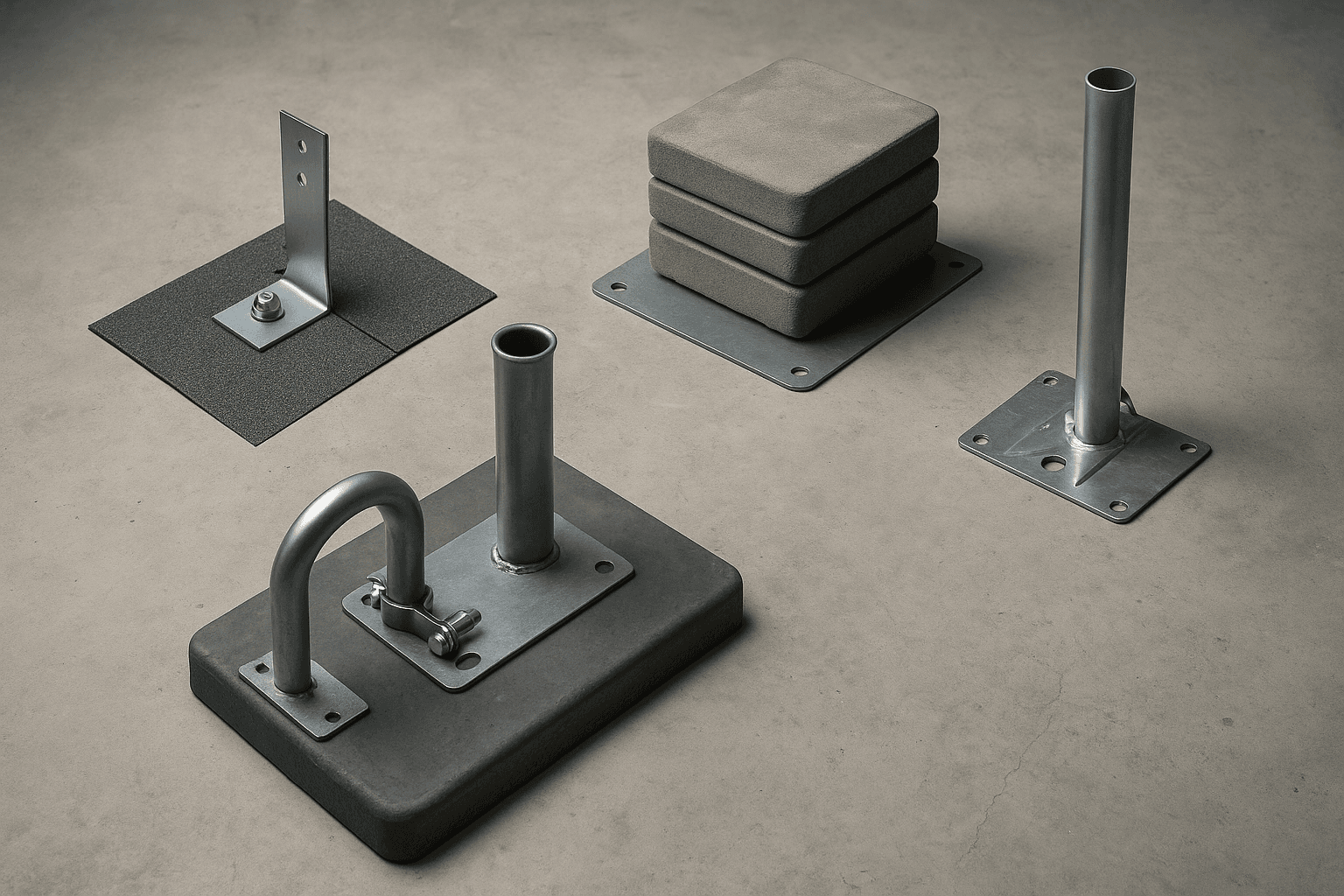
How it works. A steel foot lags directly into a rafter through the shingle and decking. Flashing seals the shingle course above and below the foot. Polyurethane sealant around the lag threads and under the flashing edges.
Pros.
- Fast. One to two hours for the whole install.
- Strong. Lagged to structure, not to sheathing.
- Proven. Same method used for solar and for decades of satellite TV installs.
- Cheapest mount option.
Cons.
- Requires a penetration.
- Shingle integrity matters — if the shingles are end-of-life, the penetration location becomes a future leak candidate.
Best for. Single-family homes with composition shingle, installed before roof replacement within the next 10 years.
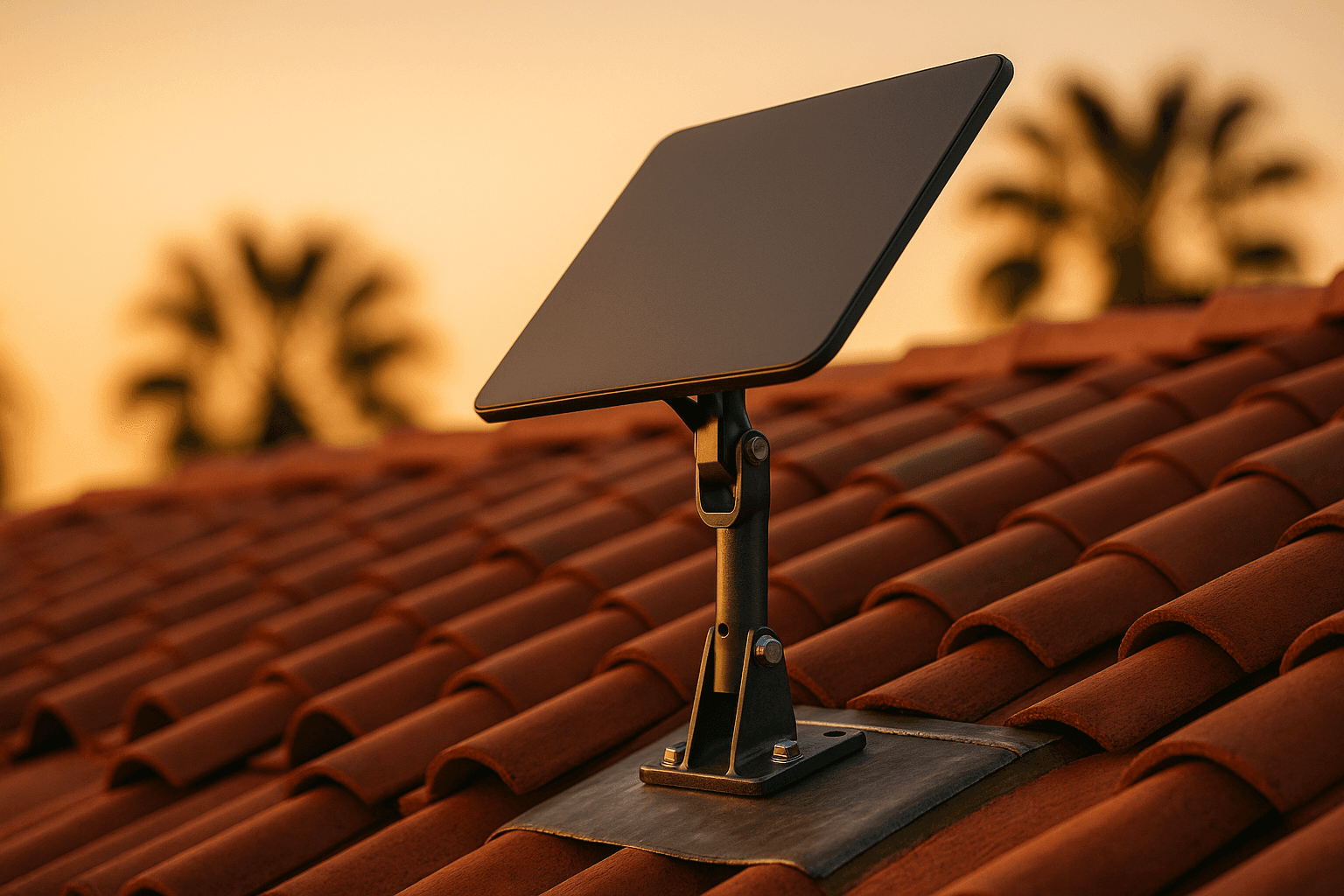
2. Tile Roof Mount (Concrete or Clay)
Common across San Juan Capistrano, Anaheim Hills, Villa Park, and parts of Mission Viejo.
How it works. We lift the tile carefully, install a tile hook or tile flashing kit that anchors to the deck and sneaks back under the next course of tile. The hook extends out from under the tile, and the mount arm connects to the hook above the roof plane. The tile covers the penetration.
Pros.
- No visible hardware under the tile.
- Penetration is fully protected by the tile above.
- Works on both concrete and clay.
Cons.
- Takes longer — tile work is slow.
- Tile breakage risk if the tile is old and brittle. We carry spare tile for common OC tile styles.
- More expensive than shingle mount.
Never do this. Never drill directly through the tile. Every tile drilled through is a future leak.
Best for. Clay or concrete tile homes. Tile is expensive to replace, so this is the only sane approach.
3. Flat Roof Ballast Mount
Common on mid-century modern homes in Costa Mesa Eastside, some Newport Beach and Dana Point properties, and commercial buildings.
How it works. A freestanding steel or aluminum base with a mast. Concrete blocks (40 to 80 pounds total depending on wind zone) sit on the base and hold the whole thing down through gravity alone. Zero penetrations.
Pros.
- No roof penetration — huge for warranty-covered commercial membrane roofs.
- Reversible. Pick it up and move it.
- Great option when the flat roof has no clear pitched-roof neighbor.
Cons.
- Adds weight (but within typical flat-roof load limits for a residential-scale ballast).
- Blocks are visible from higher angles.
- In very exposed coastal locations we upsize the ballast or shift to a weighted sleeper system with wind calcs.
Best for. Flat modified-bitumen, TPO, or built-up roofs; commercial buildings; HOA installs where any penetration is denied.
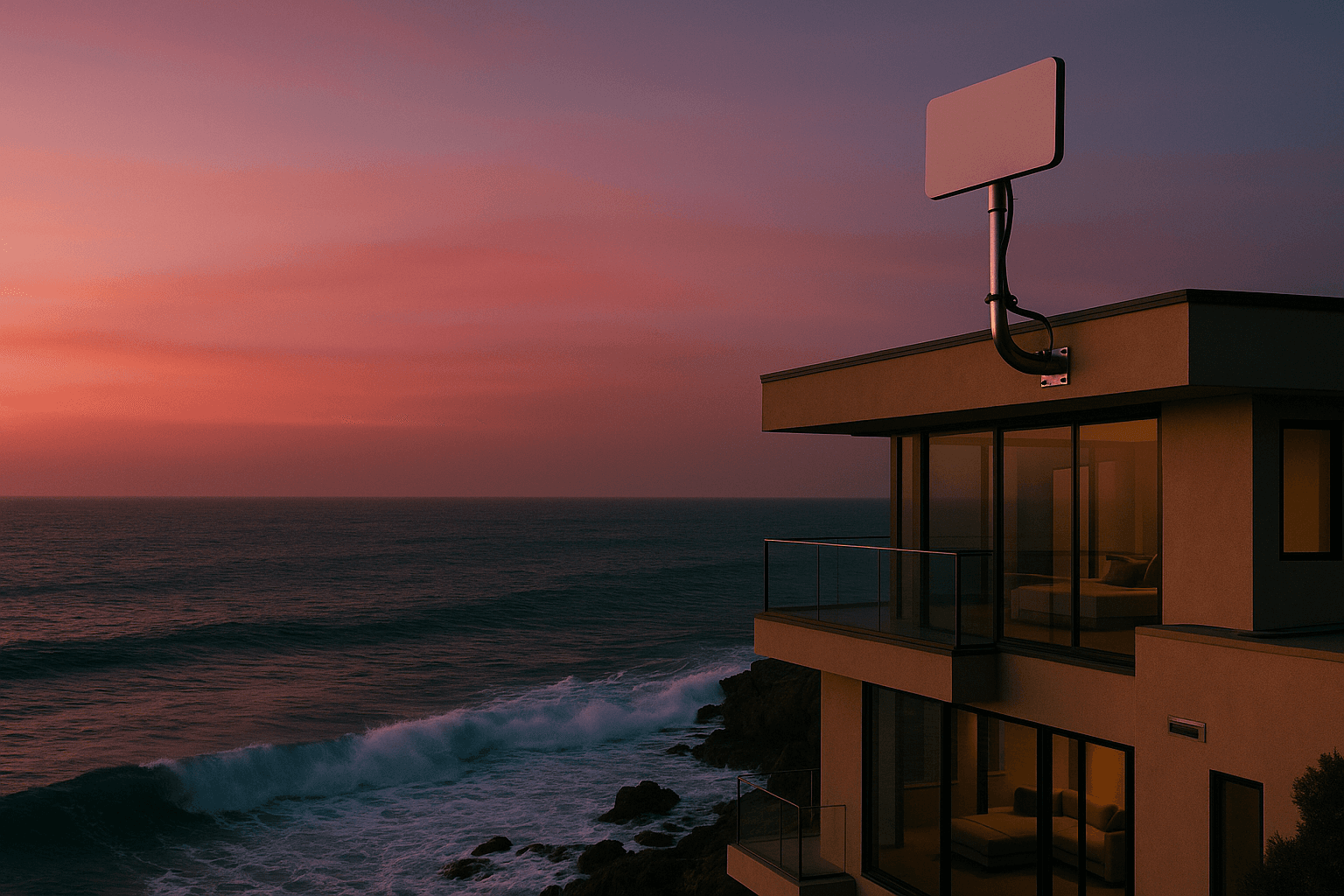
4. Non-Penetrating J-Mount (Eave / Fascia)
The HOA-friendly workhorse.
How it works. A J-shaped arm clamps to the fascia board or a rafter tail. No roof penetration. The dish sits just above the roofline, often concealed behind a parapet or a gable end.
Pros.
- No roof penetration.
- Low visibility from the street.
- Fast to install and easy to remove.
Cons.
- Only works if the eave location has a clear sky view.
- Not suitable for heavy dishes (Flat High Performance, Business) in exposed wind zones without reinforcement.
Best for. HOA-sensitive installs in Irvine village communities, Laguna Woods, Ladera Ranch, and gated neighborhoods where architectural approval is required.
5. Chimney Strap Mount
A niche but useful option.
How it works. Two stainless-steel straps wrap the chimney with ratcheted tension. A bracket mounts to the straps and holds the dish mast. No penetrations into the chimney or roof.
Pros.
- No penetration.
- Chimneys are often the highest point on the roof — great sky view.
- Strong when the chimney is strong.
Cons.
- Only as secure as the chimney itself. We inspect mortar joints and cap first.
- Aesthetic: the mount is visible from below.
Best for. Solid masonry chimneys in a location with the best sky view on the roof.
6. Pole Mount (Ground Mount)
When the roof can not get a clean line.
How it works. A steel pole set in a concrete footing (typically 24 inches deep, 12 inches across), located 10 to 30 feet from the house. The dish sits at 12 to 20 feet up. Cable runs underground in conduit to the house.
Pros.
- Full sky view away from trees, chimneys, and neighboring houses.
- Fully customizable height.
- No roof work.
Cons.
- Requires yard space.
- Concrete footing and trenching take a full day.
- More expensive than any roof mount.
Best for. Canyon homes with tall neighbors, heavily treed lots in older Santa Ana, Orange, and Fullerton neighborhoods, and rural properties in Silverado and Modjeska.
How We Pick
During the site walk we balance three factors:
- Sky view. The mount that clears the most obstructions wins.
- Cable path. The mount location must reach the router with the shortest clean run.
- Aesthetics and HOA. If there is a tie on 1 and 2, the less-visible option wins.
In practice, most single-family OC installs land on pitched roof or non-penetrating J-mount. Tile goes on tile hooks. Flat goes on ballast. Difficult lots go on pole mounts.
What About DIY?
We respect a good DIY. But the two things that go wrong most often on DIY installs are water sealing (a penetration that leaks in the next rainy season) and mount height (a dish that looks fine at install but has partial obstruction for half of every day). Both are fixable, but both are more expensive to fix than to do right the first time.
If you are DIY-curious, at minimum borrow or rent a torque wrench, use real flashing (not just sealant), and run the Starlink app obstruction scan for a full 24 hours before you commit to a location.
Ready to Install?
Every OC roof is a little different. We quote based on the actual roof, not a generic template. Get a quote and we will walk you through the right mount for your home.
Starlink Install Pro is an independent installation company. We are not affiliated with, endorsed by, or sponsored by SpaceX or Starlink.